Where to Buy the Best Animatronic Brachiosaurus For Sale?
Choosing the right Animatronic Brachiosaurus For Sale requires more than comparing prices or impressive photographs. A reliable buyer should examine construction quality, movement accuracy, sound design, warranty terms, and after-sales support. The machine should look convincing from several viewing angles. Its neck should move smoothly, not jerk between programmed positions. Foot placement, skin texture, eye movement, and breathing effects also deserve close inspection.
Paleontologist Dr. Jack Horner has often stressed the importance of evidence-based reconstruction: “A believable dinosaur begins with careful attention to the fossil evidence.” That principle also applies to animatronic displays. Reputable manufacturers should explain how their Brachiosaurus design reflects current scientific understanding. Ask for factory videos, project references, maintenance records, and technical specifications. Do not rely on dramatic showroom lighting alone. It can hide uneven seams and noisy motors.
Venue conditions matter, too. An outdoor dinosaur park needs weather-resistant materials, reinforced joints, drainage planning, and safe electrical systems. An indoor museum may prioritize quieter operation and precise visitor interaction. I have seen buyers focus heavily on appearance, then underestimate installation space and service access. That is an easy mistake.
This guide compares dependable suppliers, customization options, realistic motion systems, and ownership costs. It also considers an uncomfortable issue: the cheapest model may become the most expensive choice after repeated repairs. A strong purchase should balance spectacle, durability, scientific credibility, and practical support. Even small details matter. A convincing Brachiosaurus should feel alive, but it must also remain safe, maintainable, and honest about what it represents.
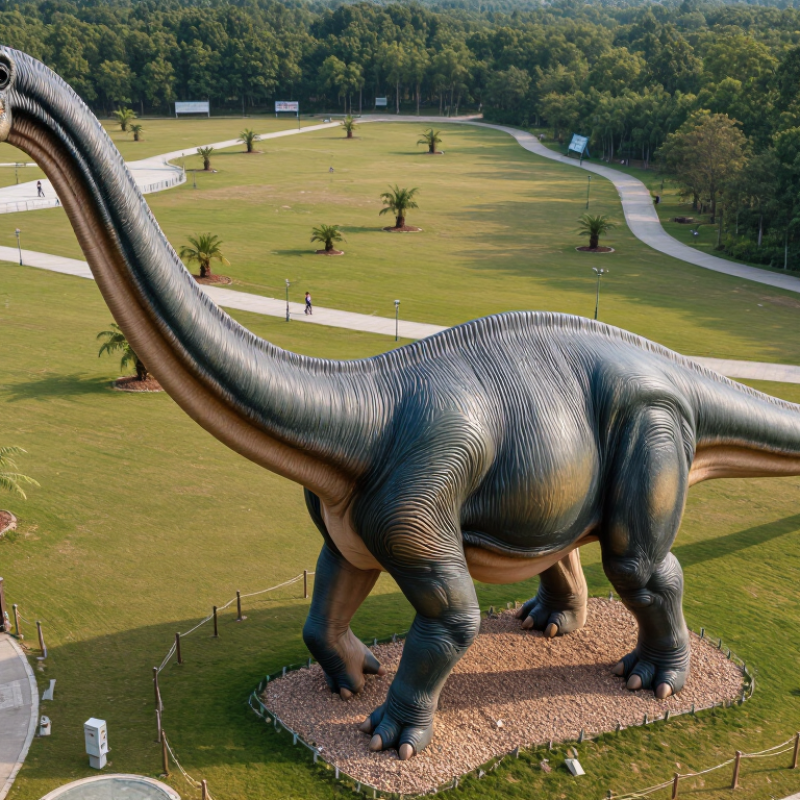
Define the Ideal Model Using Brachiosaurus Data: 18–21 m Long, 28–58 t
Where to Buy the Best Animatronic Brachiosaurus For Sale?
An ideal animatronic Brachiosaurus should reflect credible fossil data, not only dramatic appearance. Adult estimates commonly place its length between 18 and 21 metres, with body mass estimates ranging from 28 to 58 tonnes. These figures vary because fossils rarely preserve complete skeletons. Therefore, a reliable supplier should explain its scaling method and provide technical drawings.
Look for a model with accurate limb proportions, a raised neck, and a balanced tail. The head should move smoothly, without sudden mechanical jerks. Outdoor models need sealed motors, protected wiring, and stable anchoring systems. Ask for movement tests, material specifications, installation records, and maintenance guidance. In my experience, quiet operation often reveals better engineering than excessive movement. However, I may be wrong when judging a model from photographs alone.
Tips: Compare the model’s length with a 20-metre reference line before purchasing. Confirm whether the stated size includes the tail. Check wind-load calculations for outdoor displays. Request recent videos showing walking, neck, jaw, and breathing motions. A smaller model may be more convincing if its proportions are carefully researched. Do not trust weight claims without clarification; an animatronic structure cannot weigh like a living 28–58-tonne animal. Some sellers also overstate realism, and that deserves careful questioning.
Compare 3–8 m Display Sizes, Motion Axes, Materials, and Control Systems
Where to Buy the Best Animatronic Brachiosaurus For Sale?
Display size changes everything. A 3-meter brachiosaurus suits indoor halls, museum corners, and ceilings below 4 meters. An 8-meter model needs generous clearance, stronger anchoring, and a transport plan. Grand View Research valued the global theme parks market at over USD 50 billion in 2022, showing continued demand for immersive attractions. Still, market growth does not guarantee good construction.
Compare motion axes carefully. A basic model may move its head, jaw, and neck. Advanced systems can add tail movement, breathing, eye tracking, and synchronized sound. More axes create stronger realism, but they also increase maintenance points. For a family attraction, three to five axes often balance visual impact and reliability. That is my practical preference. More movement is not always better.
Materials deserve close inspection. Fiberglass-reinforced plastic provides a rigid outer shell, while silicone improves skin texture around the mouth and eyes. Steel frames support larger bodies, but poor welding can create vibration. Ask for load calculations and installation records. ASTM F2291 guidance emphasizes risk assessment for amusement structures, although a display dinosaur may follow different local requirements. Control systems should include programmable timing, emergency stop functions, adjustable volume, and manual override. IP-rated electrical enclosures help in humid venues. I would also test the unit repeatedly before opening day. A supplier’s video is useful, but it cannot reveal every weakness.
Where to Buy the Best Animatronic Brachiosaurus For Sale?
Comparison of 3–8 m display sizes, motion axes, materials, and control systems
Larger animatronic Brachiosaurus displays typically require more motion axes and control channels. The reference values below reflect common planning ranges for outdoor exhibition figures; final specifications vary according to the movement design, environmental rating, and installation requirements.
| Display Height | Typical Materials | Common Control System |
| 3–4 m | Steel frame, molded FRP or fiberglass skin | PLC or DMX-based controller |
| 5–6 m | Reinforced steel frame, FRP skin, silicone details | PLC with proportional valves and programmable sequences |
| 7–8 m | Heavy-duty steel frame, FRP skin, weather-resistant coatings | Industrial PLC, safety circuits, sensors, and multi-channel control |
Verify Outdoor Safety with IEC 60529 IP65 Protection and UL-Listed Controls
When searching for the best animatronic brachiosaurus for sale, outdoor protection should be verified before appearance or price. Ask the supplier for clear IEC 60529 test documentation showing IP65 protection. This rating indicates a dust-tight enclosure and resistance to water jets from different directions. It does not mean the dinosaur can be submerged or left in standing water. That distinction matters after heavy rain.
UL-listed controls add another layer of confidence. The listing should apply to the control panel or electrical assembly used with the animatronic system, not merely a replaceable component. Request identification numbers, installation instructions, and operating limits. Experienced suppliers should explain grounding, circuit protection, cable routing, and emergency shutoff access without vague promises. Controls should remain inside sealed enclosures, with connectors positioned away from puddles and direct runoff.
Inspect the installation site carefully. A level foundation, proper drainage, and protected cable paths reduce avoidable failures. Look for cracked seals, loose glands, corrosion, or unusual motor noise during routine checks. IP65 protection can weaken when an enclosure is drilled, repaired, or poorly closed. I have seen outdoor equipment appear secure while one small cable entry allowed moisture inside. That detail is easy to miss. Ask how replacement parts are tested after servicing, and keep inspection records with dates and photographs. Good documentation supports safer decisions, although it cannot replace qualified electrical work or local installation requirements.
Evaluate Suppliers by Warranty Length, Installation Support, and Spare Parts
Where to Buy the Best Animatronic Brachiosaurus For Sale?
A reliable supplier should offer more than an impressive showroom video. Check the written warranty before comparing prices. For a large outdoor Brachiosaurus, three to five years of coverage is a reasonable benchmark. Confirm whether it covers motors, control systems, wiring, paint, and structural components. Some warranties exclude moisture damage or installation errors, so read every condition carefully. A long warranty means little without clear response times.
Installation support can prevent expensive mistakes. Ask whether technicians provide site measurements, foundation guidance, wiring diagrams, and remote commissioning. On-site assistance is valuable when the neck movement needs calibration or the feet require precise anchoring. Request a step-by-step installation schedule. It should mention lifting equipment, concrete curing, electrical requirements, and weather protection. Video guidance helps, but it cannot replace hands-on support in difficult sites. I have seen projects lose days because cable routes were planned too late.
Spare parts deserve equal attention. Ask for a parts list with prices and expected delivery times. Common replacements include servo motors, control boards, sensors, gearboxes, cables, and silicone skin sections. The supplier should explain how parts are identified and tested. Keeping critical components locally can reduce downtime during busy visitor periods. However, storing everything is unnecessary and costly. A practical plan might include extra sensors, fuses, and one control module. Recheck those recommendations with a qualified technician. Some suppliers promise lifetime support, but that phrase needs measurable service terms.
Calculate Five-Year Total Cost: Purchase, Shipping, Power, Maintenance, and Repairs
When comparing an animatronic brachiosaurus for sale, calculate its five-year cost, not only the purchase price. Request a written quote covering crating, inland delivery, installation, and taxes. The U.S. Bureau of Labor Statistics tracks frequent changes in transportation and warehousing prices, so freight estimates can become outdated quickly. A reliable supplier should provide load-test videos, electrical specifications, outdoor-rating details, spare-part availability, and warranty terms.
Consider this planning example: a $45,000 dinosaur may require $6,000 for shipping and setup. If it uses 0.8 kilowatts for eight hours daily, across 300 operating days yearly, five-year electricity costs reach about $1,248 at $0.13 per kilowatt-hour. That rate reflects the approximate U.S. commercial average reported by the Energy Information Administration. Add an annual maintenance allowance of 8%, or $18,000 over five years, for lubrication, sensor checks, control adjustments, and weather sealing. A $4,500 repair reserve brings the estimated total near $74,750. This is only a working model. Actual movement cycles can change the result sharply.
Tips: Ask for the measured wattage during motion, idle, and startup. Keep a replacement-sensor list onsite. Schedule quarterly inspections. Do not trust “maintenance-free” wording without service records. My estimate may overstate routine care, yet ignoring repairs is usually the costlier mistake. Compare three written quotations, including delivery insurance and technician travel.

