How to Choose Energy Efficient Patio Doors for Your Home?
Choosing the right energy efficient patio doors for your home is vital for reducing energy costs. According to Mark Johnson, an expert in home energy efficiency, "Selecting the best patio doors can significantly impact your home's energy use." This statement emphasizes the importance of making informed decisions.
When exploring energy efficient patio doors, consider the materials and designs that offer superior insulation. Options include fiberglass and vinyl, both known for their energy-saving capabilities. Look for features like double or triple glazing, which can greatly enhance thermal performance.
However, the decision-making process can be overwhelming. Many homeowners may overlook crucial factors like weather-resistant frames. They might focus solely on aesthetics without considering energy ratings. Reflecting on these choices can lead to a better understanding of your home's needs. Ultimately, making a thoughtful selection can improve comfort and save on energy bills.
Understanding Energy Efficiency Ratings for Patio Doors
When selecting patio doors, understanding energy efficiency ratings is crucial. These ratings help you assess how well a door insulates against heat loss and gain. Common labels include the R-value and U-factor. The R-value indicates resistance to heat flow; higher numbers mean better performance. The U-factor gauges how much heat escapes. A lower U-factor is preferable.
Look for doors with energy-efficient glass. Double or triple glazing can significantly reduce thermal transfer. Additionally, consider low-emissivity (Low-E) coatings. These coatings reflect heat, providing an extra layer of protection. However, not all coated doors perform equally; always check their ratings.
Choosing the right frame material also influences efficiency. Vinyl and fiberglass frames often provide better insulation than aluminum. This choice can impact your comfort and heating bills. However, factors like aesthetic appeal shouldn't be overlooked. Balancing efficiency and design is complex. Assess your home's unique needs before deciding.
How to Choose Energy Efficient Patio Doors for Your Home? - Understanding Energy Efficiency Ratings for Patio Doors
| Door Type |
Frame Material |
Energy Efficiency Rating (U-factor) |
Supported Features |
Estimated Price Range |
| Sliding Patio Door |
Vinyl |
0.28 |
Low-E Glass, Multi-point Lock |
$1,200 - $2,500 |
| French Patio Door |
Wood |
0.22 |
Double Glazing, Weather Stripping |
$1,500 - $3,000 |
| Bi-Folding Patio Door |
Aluminum |
0.26 |
Thermal Break, Low-E Glass |
$3,000 - $5,000 |
| Sliding Glass Door |
Fiberglass |
0.30 |
Triple Glazing, Security Handle |
$1,800 - $3,200 |
The Importance of Insulation in Patio Door Design
When selecting patio doors, insulation plays a vital role in energy efficiency. Poor insulation can lead to heat loss during winter and heat gain in summer. This results in increased energy bills. Look for doors with double or triple glazing. These layers trap air, improving insulation.
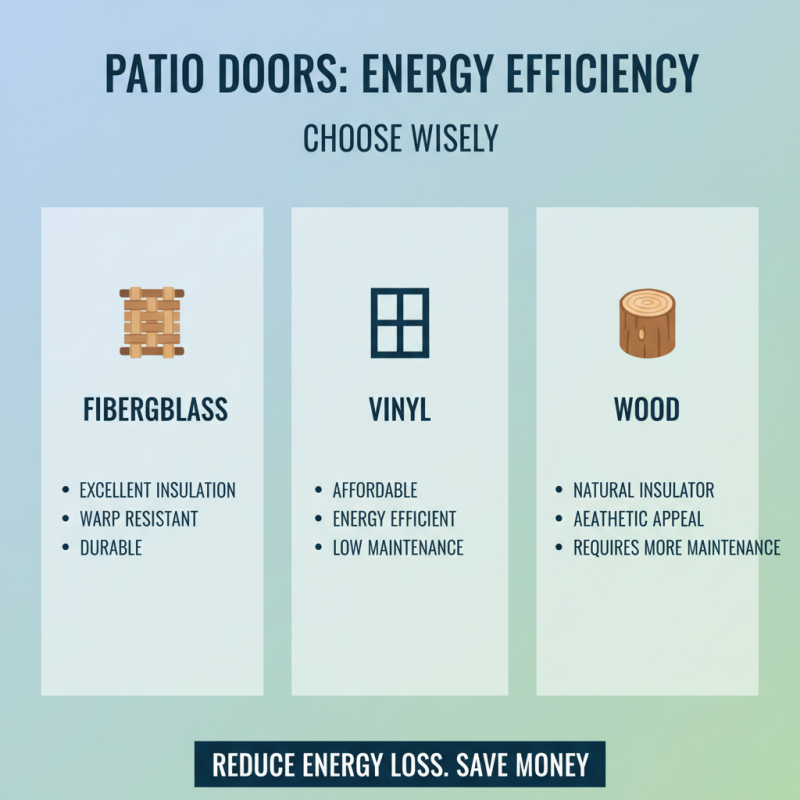
Understanding the materials of your patio doors is crucial. Vinyl, fiberglass, and wood are common choices, each with unique insulation properties. For instance, fiberglass can provide excellent energy retention. However, wood requires regular maintenance to prevent issues like rotting or warping.
Measure the space carefully. Gaps around the door can compromise insulation. Even the smallest cracks can allow drafts. Consider professional installation for a perfect fit. Sometimes, DIY efforts miss key details, affecting long-term performance. Ultimately, focus on insulation, and you’ll find a door that balances aesthetics and efficiency.
Materials That Enhance Energy Efficiency in Patio Doors
Choosing the right materials for patio doors is crucial for energy efficiency. When selecting, consider options like fiberglass, vinyl, and wood. Fiberglass doors offer excellent insulation properties. They resist warping and are durable against the elements. Vinyl doors, on the other hand, are affordable and energy efficient. They require little maintenance and help reduce energy loss.
Wood is aesthetically pleasing but may not be the best choice for energy savings. It requires regular upkeep to prevent drafts. Some homeowners find issues with rotting or swelling. Understanding these drawbacks helps in making informed decisions. Look for doors with double or triple-pane glass. These options greatly improve insulation and reduce heating costs.
Energy efficiency involves more than just materials. Installation matters too. Poorly installed doors can lead to air leaks. This compromises energy savings, regardless of the material. Ensure that the doors fit snugly and are properly sealed. Consider the overall design of your home. The right choice can enhance comfort and reduce energy bills over time.
Comparing Different Energy Star Ratings for Patio Doors
When selecting energy-efficient patio doors, understanding Energy Star ratings is crucial. These ratings indicate how well a product can conserve energy. According to the U.S. Department of Energy, doors with a high energy efficiency rating can lower heating and cooling costs by up to 15%. Such savings can significantly impact your energy bills throughout the year.
Energy Star ratings encompass U-factor and Solar Heat Gain Coefficient (SHGC) metrics. The U-factor measures insulation efficiency. Lower values indicate better insulation. For example, doors with a U-factor of 0.30 or lower are considered excellent. On the other hand, the SHGC assesses how much solar heat passes through the door. A lower SHGC means reduced heat gain in the summer months, which is essential in warmer climates.
However, not all energy-efficient doors fit every home. The style and size must match your needs. You might find a door with excellent ratings that doesn’t complement your home’s design. Moreover, it’s worth reflecting on long-term performance versus initial costs. Sometimes, cheaper options may lead to higher energy expenses later on. Choosing wisely requires careful consideration of all these elements.
Investment Considerations: Cost vs. Energy Savings Over Time
When selecting energy-efficient patio doors, the cost versus energy savings is a key consideration. According to the U.S. Department of Energy, homes lose about 30% of their heating and cooling energy through inefficient doors and windows. Opting for energy-efficient options can significantly reduce your monthly energy bills. Studies suggest that upgrading to energy-efficient patio doors can yield savings of up to $500 annually, depending on your local climate.
However, the initial investment can be daunting. Energy-efficient doors often cost more upfront, sometimes exceeding 20% compared to standard models. Yet, the long-term savings can offset this price gap. A report from the American Council for an Energy-Efficient Economy emphasizes that homeowners can recover their costs within 5-10 years through energy savings. Such a decision requires careful evaluation of your budget and the potential for energy savings in your home.
Balancing immediate costs with future benefits is crucial. Many homeowners overlook the importance of the product's lifespan. Energy-efficient doors typically last longer than standard models. This adds value to your investment. Still, it’s essential to research and assess options carefully. The market can be overwhelming, and not all products provide the same level of efficiency. The right choice can lead to significant savings. Yet, decision-making should involve more than just financial considerations.