Choosing windows and sliding glass doors is not just a style decision. The right units can make a room brighter, quieter, and more comfortable, while poor choices may invite drafts, condensation, or difficult operation. The U.S. Department of Energy’s Energy Saver guidance estimates that heat gain and loss through windows account for 25–30% of residential heating and cooling energy use. That figure makes glass area, climate, and energy ratings worth careful attention. Small details matter. A sunny living room with a wide west-facing slider has different needs from a shaded bedroom window.
Building-science expert Joseph Lstiburek is often quoted as saying, “A window is a hole in the wall.” The blunt reminder points to a practical issue: performance depends on the frame and glass, but also on proper installation and water management. The National Fenestration Rating Council’s labels help shoppers compare tested energy-performance ratings, including U-factor and solar heat gain coefficient. Those numbers are useful, though they cannot tell you whether a handle feels comfortable or a screen slides smoothly. Before comparing finishes, consider how often the door will be used, whether furniture blocks its path, and how much maintenance you can manage. Even attractive products can disappoint when they do not suit the room. This guide offers 10 tips for choosing windows and sliding glass doors, balancing measurable performance with the everyday details that are easy to overlook.
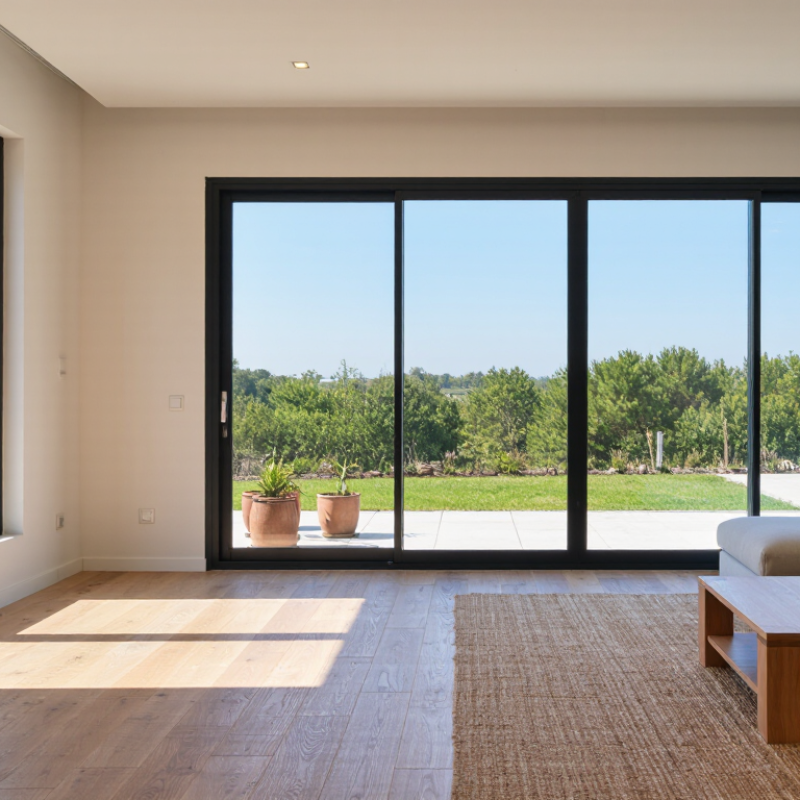
Windows and sliding glass doors can brighten a room, but their glass and frames also affect indoor comfort. The U.S. Department of Energy estimates that windows account for 25–30% of residential heating and cooling energy use through heat gain and loss. The actual impact varies with climate, window condition, orientation, and installation. A sunny south-facing room may overheat in summer, while a poorly sealed frame can feel chilly on a windy evening. Small clues matter.
Tip: Check for drafts around the frame, condensation between panes, and rooms that feel warmer or colder than others. Compare window ratings for your climate, and look for appropriate low-emissivity glazing and insulated frames. For sliding glass doors, inspect the weatherstripping and track. A door should slide smoothly and close snugly; a dusty track can hide a poor seal.
Before choosing replacements, note which direction each opening faces and when direct sun reaches the glass. Exterior shading may help reduce summer heat, while better sealing can limit winter drafts. Don’t judge by glass alone. Installation details matter, too, and even a high-performing unit may disappoint if gaps remain around its frame. I’d measure carefully, then ask a qualified installer how the proposed assembly handles local conditions. It’s easy to overlook that part.
| Tip | What to Assess | Useful Data or Benchmark | Practical Selection Guidance |
|---|---|---|---|
| 1. Assess exposure | Direction of the opening, local climate, shading, and seasonal sun. | The U.S. Department of Energy estimates that windows are responsible for about 25–30% of residential heating and cooling energy use. | Prioritize the most exposed or uncomfortable rooms. In the Northern Hemisphere, south-facing glass generally receives more direct winter sun; east- and west-facing glass can receive strong low-angle sun. |
| 2. Compare U-factor | How readily heat transfers through the complete window or door assembly. | U-factor is commonly reported in Btu/(h·ft²·°F). A lower value indicates better resistance to heat flow. | Compare the NFRC-rated whole-unit U-factor, not just the center-of-glass value. Choose a value suited to the climate and applicable energy code. |
| 3. Match SHGC to sun exposure | How much solar heat the glazing admits. | Solar Heat Gain Coefficient (SHGC) ranges from 0 to 1; lower values admit less solar heat. | A lower SHGC can help limit unwanted summer heat on sunny exposures. Where useful winter solar gain is desired, compare options with a higher SHGC and plan for summer shading. |
| 4. Check visible transmittance | How much visible daylight passes through the glazing. | Visible Transmittance (VT) is reported on a scale from 0 to 1; higher values generally mean more daylight. | Balance daylight with glare control and solar performance. Compare VT alongside SHGC rather than choosing by glass appearance alone. |
| 5. Review the whole-unit rating | Glass, frame, spacer, and other components together. | NFRC labels provide comparable whole-product ratings, including U-factor and SHGC; some products also list VT and air leakage. | Compare the same rating categories across products. A center-of-glass rating does not represent the performance of the entire window or sliding door. |
| 6. Consider glazing and frame | Number of panes, low-emissivity coatings, gas fills, and frame construction. | Performance depends on the complete product design; no single glazing feature guarantees a particular whole-unit rating. | Use the rated U-factor and SHGC to verify performance. Ask how the frame and glass package suit the local climate and the opening’s exposure. |
| 7. Check air leakage | Potential drafts around the sash, panels, and frame. | Where reported, air leakage is typically expressed in cubic feet per minute per square foot of window area; lower values indicate less air leakage. | Compare products using the same test and rating basis. Proper installation and weather-sealing are also essential to limit drafts. |
| 8. Inspect sliding-door operation | Panel movement, track condition, weather seals, and locking points. | A door should move smoothly and close evenly; gaps or damaged seals can reduce comfort and weather resistance. | Check that panels operate without binding and that the closed door engages its seals and lock. Keep tracks clean and follow the product’s maintenance instructions. |
| 9. Plan for water management | Flashing, sill details, drainage, and the transition between the door and floor or deck. | Water resistance depends on the product, installation, and surrounding construction—not on the glass rating alone. | Follow the manufacturer’s installation details and local code. Confirm that the sill and flashing direct water outward and that drainage paths remain clear. |
| 10. Verify safety and installation requirements | Glazing location, fall hazards, local building code, and installer qualifications. | Building codes may require safety glazing in specified locations, including certain areas near doors and other hazardous locations. | Check local requirements before ordering. Confirm the product size, opening measurements, installation instructions, and warranty conditions. |





© 2025 KT Fairglass. | The #1 Doors & Windows Company in Vernon BC
