Why Choose IPE Beam for Global Construction Projects?
Choosing the right structural section can shape a project’s safety, cost, and construction schedule. IPE BEAM profiles are widely used in global construction because their parallel flanges simplify connections, detailing, and steel fabrication. On a busy site, this can mean faster bolting, cleaner alignment, and fewer modifications around columns or floor systems.
IPE sections offer efficient strength with relatively low self-weight. Their geometry supports common applications, including floor beams, platforms, industrial buildings, and commercial frames. Engineers can compare section depth, bending resistance, deflection limits, and buckling performance before selecting a suitable profile. European standards, such as EN 10365 and EN 10025, provide useful references for dimensions and steel grades. However, imported materials must still meet the project’s approved specifications and local building requirements.
Real projects are less predictable.
Transport limits, crane capacity, corrosion exposure, and supplier consistency can change the best choice. A deeper IPE BEAM may reduce deflection, yet create conflicts with ceilings, ducts, or fireproofing. A lighter section may reduce handling costs, but require closer spacing or additional bracing. These trade-offs deserve careful review by qualified structural professionals. Product certificates, mill test reports, and dimensional inspections also strengthen procurement reliability. No profile is automatically ideal worldwide. Local codes, climate conditions, connection design, and construction experience remain decisive. A practical selection combines verified engineering calculations with what workers can safely install on site. Mistakes happen when catalog values replace project-specific judgment.
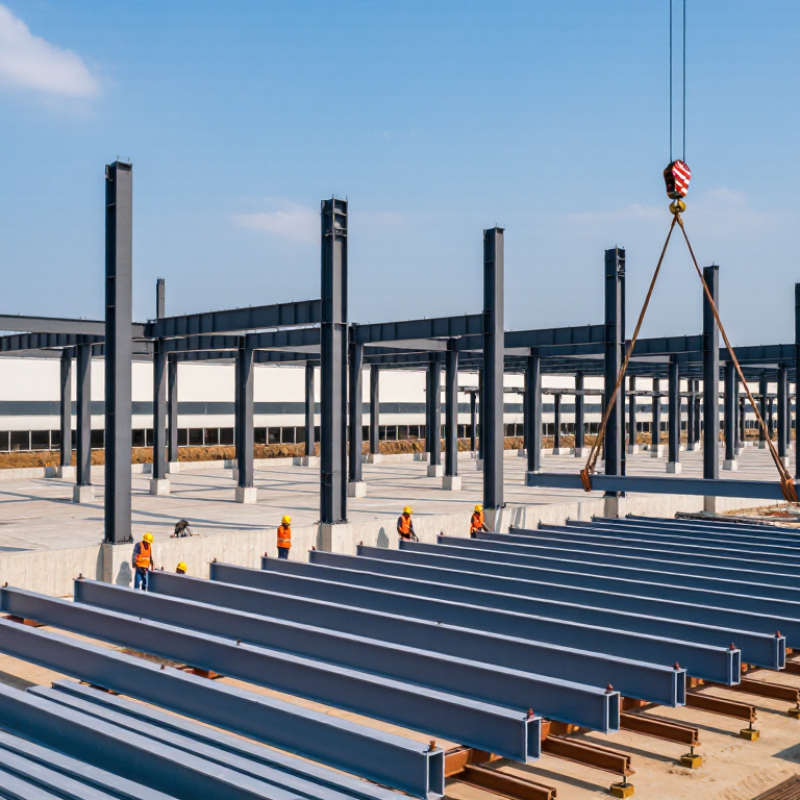
What Is an IPE Beam and Where Is It Used?
What Is an IPE Beam and Where Is It Used?
An IPE beam is a hot-rolled steel section with an I-shaped profile. Its name refers to a European standard section with parallel flange faces. The flanges resist bending, while the narrow web carries much of the shear force. This geometry provides useful strength without excessive steel weight. Common sizes vary in depth, flange width, thickness, and mass per metre. Engineers select the section after checking span, load, deflection, and connection requirements.
IPE beams are widely used in building frames, mezzanines, floor systems, roof structures, and industrial platforms. They can support concrete slabs, steel decking, and secondary beams. In a warehouse, an IPE beam may span between columns beneath a service floor. On a construction site, its straight profile also simplifies bolted and welded connections. Fabricators still need accurate drawings, because small changes in bolt spacing can affect the joint’s performance.
The section is efficient, but it is not automatically suitable for every project. Long beams may buckle laterally if restraints are missing. Fire exposure, corrosion, vibration, and local flange damage also require attention. It is easy to focus on beam strength and overlook the supports. That assumption can fail. Site measurements should confirm the real span and bearing conditions before fabrication. Details matter. Experienced engineers normally verify the design against applicable structural standards and the project’s environmental conditions.
Key Advantages of IPE Beams in Global Construction
Why Choose IPE Beam for Global Construction Projects?
Key Advantages of IPE Beams in Global Construction
IPE beams support global construction through standardized dimensions, efficient weight distribution, and practical fabrication. The EN 10365 standard defines common European steel sections, helping engineers compare sizes across international projects. This consistency simplifies procurement and reduces drawing revisions. World Steel Association data reports that global crude steel production reached about 1.89 billion tonnes in 2023. Such production capacity supports broad material availability, although regional stock levels still require verification.
An IPE beam’s parallel flanges provide stable connections for plates, bolts, and secondary steelwork. Its shape places material where bending stresses are usually higher. This can reduce structural weight and lifting demands. The International Energy Agency estimates steel production causes around 7–9% of global carbon dioxide emissions. Lower beam weight may reduce embodied impacts, but it is not automatically greener. Engineers must compare service life, recycled content, transport distance, and fabrication waste.
Tips: Check local section availability before final design. Confirm EN 10365 dimensions, steel grade, tolerances, and Eurocode 3 requirements with a qualified engineer. Do not select the lightest beam without reviewing deflection, vibration, fire protection, and connection behavior. A smaller section can look efficient on paper. It may create expensive site problems. Rechecking assumptions is worthwhile.
Material Standards, Manufacturing, and Quality Considerations
Why Choose IPE Beam for Global Construction Projects?
Material Standards, Manufacturing, and Quality Considerations
IPE beams suit global projects because their standardized geometry supports predictable design and fabrication. EN 10365 defines common IPE dimensions, while EN 10025 specifies structural steel grades and delivery conditions. These references reduce confusion between suppliers and countries. However, a familiar profile is not automatically a safe choice. Engineers must confirm span, load, buckling risk, fire exposure, and connection details for each project.
Manufacturing quality begins with controlled hot rolling. Mills should verify chemical composition, yield strength, tensile strength, and impact performance. EN 10034 also addresses dimensional tolerances for structural sections. The World Steel Association reported 1.89 billion tonnes of crude steel production in 2023. Construction remains one of steel’s largest end uses, so small quality failures can affect many projects. Mill certificates help, but paperwork can be incomplete or poorly matched to delivered bundles. Physical inspection still matters.
Tips: Request heat numbers, test certificates, and production dates before shipment. Check flange width, web thickness, straightness, and surface damage on arrival. Use independent testing for critical members. A useful warning: engineers sometimes trust certificates too quickly. That habit deserves review. Corrosion protection also needs local climate data, not a generic coating specification. When standards conflict, record the design basis clearly and obtain written technical approval.
Why Choose IPE Beam for Global Construction Projects?
IPE beams are standardized European wide-flange sections designed for consistent dimensions, predictable structural performance, and efficient material use. The chart shows the nominal mass per metre of commonly specified IPE sections according to EN 10365 section data.
Material grades are commonly specified under EN 10025, dimensional and mass characteristics under EN 10365, and product tolerances under EN 10034. For quality control, project buyers may also request EN 10204 Type 3.1 inspection documents, including chemical composition and mechanical test results.
How to Select IPE Beams for Different Project Requirements
Why Choose IPE Beam for Global Construction Projects?
How to Select IPE Beams for Different Project Requirements
Selecting an IPE beam starts with the project’s actual demands, not the lowest catalogue weight. Measure span, factored loads, support conditions, and serviceability limits. EN 10365 provides standardized dimensions, masses, and section properties for European IPE profiles. These values support reliable preliminary comparisons.
For long spans, compare bending resistance, shear capacity, and deflection before choosing a deeper section. A lighter beam may reduce transport costs, but it can increase vibration or lateral-torsional buckling risk. EN 1993-1-1 requires engineers to assess buckling, stability, and design resistance. Site reviews often reveal one overlooked issue: connections control the final beam choice. Check bolt spacing, weld access, bearing lengths, and lifting conditions early.
Steel grade matters too. Common grades such as S275 and S355 offer different yield strengths, but stronger steel does not automatically solve instability. Fire exposure, coastal corrosion, and local fabrication capacity may change the specification. The World Steel Association’s October 2024 Short Range Outlook projected global steel demand at about 1.772 billion tonnes in 2025. That scale reflects continued construction demand, but it does not justify standardizing every project on one profile. I have seen teams select beams from familiar tables, then revise them after checking deflection. That mistake is avoidable. Review calculations against the latest national annex, project loads, and mill certificates before procurement.
Why Choose IPE Beam for Global Construction Projects? - How to Select IPE Beams for Different Project Requirements
Reference selection guide based on common IPE sections manufactured to EN 10365 dimensional conventions. Actual structural capacity depends on steel grade, span, restraints, loads, connections, buckling, fire design and the governing project code.
| IPE Section | Overall Depth
(mm) | Flange Width
(mm) | Web Thickness
(mm) | Flange Thickness
(mm) | Approx. Mass
(kg/m) | Relative Structural Role | Typical Project Requirement |
| IPE 100 | 100 | 55 | 4.1 | 5.7 | 8.1 | Light-duty member | Secondary framing, small platforms, bracing and short-span supports where loads are limited. |
| IPE 120 | 120 | 64 | 4.4 | 6.3 | 10.4 | Light structural beam | Light floor framing, roof members and equipment support frames with modest bending demand. |
| IPE 160 | 160 | 82 | 5.0 | 7.4 | 15.8 | General-purpose framing | Secondary beams, mezzanines, walkways and moderate-span architectural or industrial framing. |
| IPE 200 | 200 | 100 | 5.6 | 8.5 | 22.4 | Medium-duty beam | Residential and commercial floor framing, roof beams and moderate-load industrial structures. |
| IPE 240 | 240 | 120 | 6.2 | 9.8 | 30.7 | Medium-to-heavy framing | Longer floor spans, transfer framing and support members carrying concentrated service loads. |
| IPE 300 | 300 | 150 | 7.1 | 10.7 | 42.2 | Heavy primary beam | Primary floor beams, industrial platforms, warehouse structures and heavier roof systems. |
| IPE 360 | 360 | 170 | 8.0 | 12.7 | 57.1 | High-capacity primary member | Long-span framing, heavy industrial floors and structures requiring increased bending resistance. |
| IPE 400 | 400 | 180 | 8.6 | 13.5 | 66.3 | Heavy-load beam | Large commercial floors, industrial buildings and primary members with substantial tributary areas. |
| IPE 450 | 450 | 190 | 9.4 | 14.6 | 77.6 | Very heavy primary beam | Long spans, high imposed loads, transfer beams and major industrial support frames. |
| IPE 500 | 500 | 200 | 10.2 | 16.0 | 90.7 | High-capacity structural member | Large-span floors, heavy plant-support structures and heavily loaded primary framing. |
| IPE 600 | 600 | 220 | 12.0 | 19.0 | 122.4 | Extra-heavy primary beam | Very long spans, major transfer structures and projects with exceptionally high bending demand. |
Selection checklist: Confirm the required span, factored loads, allowable deflection, lateral restraint, shear, bending, torsional and lateral-torsional buckling resistance, connection details, corrosion environment, fire rating, transport limits and local design standard before final selection. Nominal section dimensions and mass should be verified against the applicable edition of EN 10365 and the project mill certificate.

