Top Types of Residential Doors for Every Home
Choosing a front door is about more than curb appeal. It affects privacy, comfort, security, and how easily your household moves through the day. A solid wood door can bring warmth to a shaded porch, while a fiberglass model may suit a busy entry exposed to rain and changing temperatures. The right choice depends on your home, climate, budget, and maintenance preferences.
One important note: I can’t verify a real expert quotation from the information provided, so I won’t invent one. A useful editorial principle is: “Choose a door for the way your home is used, not just the way it looks.” Keep that in mind as you compare residential doors, from classic panel designs to sliding patio doors and space-saving pocket doors. Details matter. Check the frame, glazing, hardware, and weather seals, too; a beautiful slab cannot compensate for a drafty or poorly fitted opening.
This guide explores the top types of residential doors and where each one works best. You’ll see how materials influence upkeep, how glass changes light and privacy, and which styles fit common rooms and entrances. Some trade-offs are easy to miss. A wide glass panel may brighten a hallway but reveal more of the interior than you expect. Use the comparisons as a starting point, then confirm product specifications and installation needs with a qualified local professional.
How Residential Doors Are Classified by Location and Function
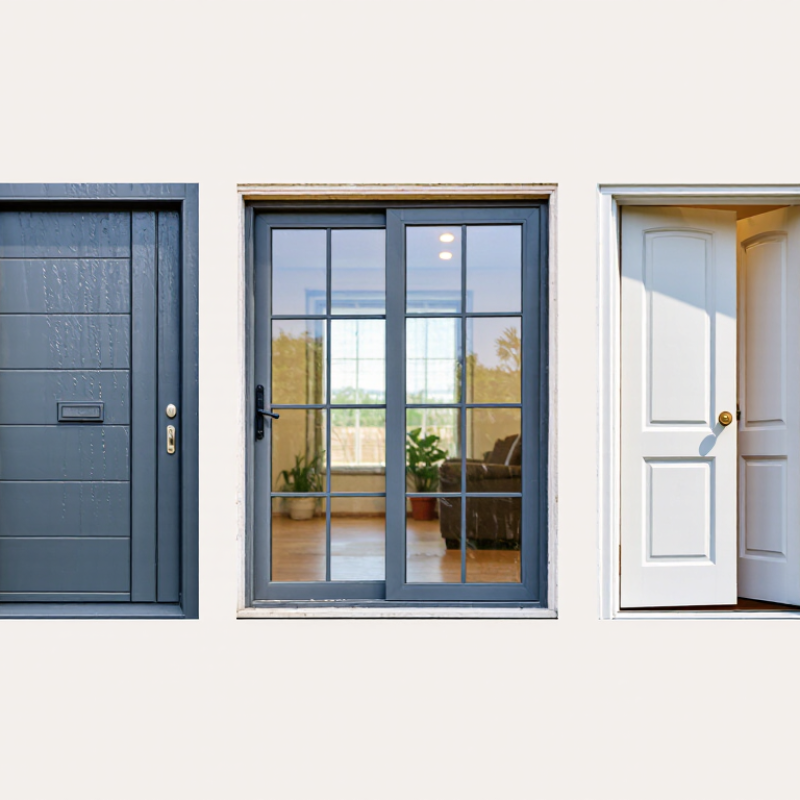
Residential doors are best classified by where they sit and what they do. Placement changes everything. A front entry door handles daily traffic, weather exposure, and security; a side or back door may prioritize quick access to a yard. Sliding and hinged patio doors connect indoor rooms with decks, while garage doors serve vehicle access and often form a large part of the home’s exterior. Inside, bedroom, bathroom, and closet doors manage privacy, sound, or simple separation.
Location also affects comfort. The U.S. Department of Energy’s Energy Saver guidance estimates that air leaks can account for 25–40% of heating and cooling energy use in a typical home, depending on climate. That figure applies to air leakage across the home, not doors alone, but it shows why exterior-door seals matter.
Check for daylight around the frame, a loose sweep, or a draft near the latch. A door may look solid and still leak. Interior doors have different priorities: a bathroom door needs privacy, while a bedroom door may benefit from better sound control.
Tips: Match the door to its location, then inspect the frame and threshold. For a patio opening, measure the clear passage and note where rainwater collects. Small details matter.
Common Interior Door Types and Their Uses
Interior doors shape how rooms connect, sound travels, and furniture fits. Hinged panel doors suit bedrooms and bathrooms because they close firmly and offer dependable privacy. Check the swing before buying; a door can block a dresser or narrow hallway. A solid-core model usually muffles household noise better than a hollow one, though it costs more and weighs more.
Pocket doors slide into a wall cavity, making them useful for small bathrooms or closets. They save floor space. But their wall hardware can be harder to repair, and nearby switches or pipes may limit installation. Bifold doors fold along a track, often fitting laundry closets where a full swing would get in the way. They open widely, though the panels can feel less sturdy during daily use. For broad openings between living and dining areas, sliding doors provide a clear passage without taking up much room.
Flush doors have smooth faces that suit simple interiors, while raised-panel doors add visible detail to traditional rooms. French doors bring daylight between spaces, but their glass offers less privacy unless paired with curtains or textured glazing. I would not choose by appearance alone. A quiet bedroom may need a tighter seal, while a pantry often benefits more from easy access. The right choice depends on the room’s traffic, wall layout, and how much sound separation matters.
Top Types of Residential Doors for Every Home
Typical residential door-leaf width ranges in inches, alongside common interior uses. Sizes vary by opening and product; these ranges are representative, not requirements.
Common uses: Hinged doors suit most rooms; pocket doors save floor space; bifold doors work well for closets; barn doors provide a sliding alternative; and French doors create a wider opening between rooms.
How Door Materials Affect Strength, Insulation, and Maintenance
A door’s material shapes its durability, but the frame and weatherstripping matter just as much. Insulated steel doors often pair a rigid outer skin with a foam core, helping limit heat transfer. They can dent, though, and damaged coatings may expose steel to rust. Fiberglass resists moisture and usually needs less repainting, but a hard impact can still crack its surface. Wood offers a solid feel and can be repaired, yet changing humidity may cause swelling or sticking. Not every door performs alike.
The U.S. Department of Energy’s Energy Saver guidance says air sealing can typically reduce household heating and cooling costs by 10% to 20%; that figure covers the home, not doors alone. Still, it shows why a leaky threshold deserves attention. Check an NFRC label for a door’s U-factor: lower values indicate less heat transfer. A strong slab cannot compensate for gaps around its frame. On a cold morning, even a small draft at ankle height is noticeable. Installation details are easy to overlook, and material labels can make comparisons seem simpler than they are. A well-fitted, weatherstripped door may outperform a more expensive door installed poorly.
Factors to Consider When Choosing a Door for Your Home
Choosing a residential door means balancing insulation, durability, daylight, privacy, and daily use. The U.S. Department of Energy estimates that heat gain and loss through windows account for 25–30% of residential heating and cooling energy use. That figure applies to windows, not solid doors, but it matters when comparing doors with large glass panels. Check the National Fenestration Rating Council label for U-factor and solar heat gain coefficient; lower U-factors generally indicate better insulation. Climate matters. A sun-facing glass door may need different glazing from a shaded, wind-exposed entrance.
Material affects upkeep and feel. Steel can suit a sheltered entry, while fiberglass resists many weather-related problems; wood offers warmth but usually needs more maintenance. Inspect the frame, threshold, seals, and fit—not just the door slab. A small gap can invite drafts or rain. Also consider swing clearance, access needs, privacy, and how often the door will be used. It is easy to overvalue appearance; a striking door that sticks after a wet season is a poor trade.
Tips: Measure the opening before shopping. Compare labeled performance ratings, and ask how installation will seal the frame. Check the threshold after heavy rain. A simple detail, but an easy one to overlook.